Regulatory Echoes: How State Laws Redirect Bonus Allocations Across Mobile Gaming Portfolios
Ines Otto · Jul 19, 2026
Regulatory Echoes: How State Laws Redirect Bonus Allocations Across Mobile Gaming Portfolios
State regulations continue to shape bonus structures in mobile gaming, and operators respond by shifting promotional resources from one game category to another depending on the jurisdiction. In July 2026, several states updated their guidelines on wagering requirements and advertising disclosures, which in turn prompted portfolio-wide reallocations that favor certain slot titles over table games or vice versa.
State-Specific Rules Create Divergent Bonus Pathways
Operators track each state's stance on bonus types because rules on free spins, deposit matches, and cashback percentages differ sharply. New Jersey's Division of Gaming Enforcement requires clear disclosure of playthrough multiples before any promotional offer reaches a mobile user, whereas Pennsylvania emphasizes restrictions on combining bonuses across multiple game verticals. These distinctions force platforms to maintain separate allocation models rather than a single nationwide strategy.
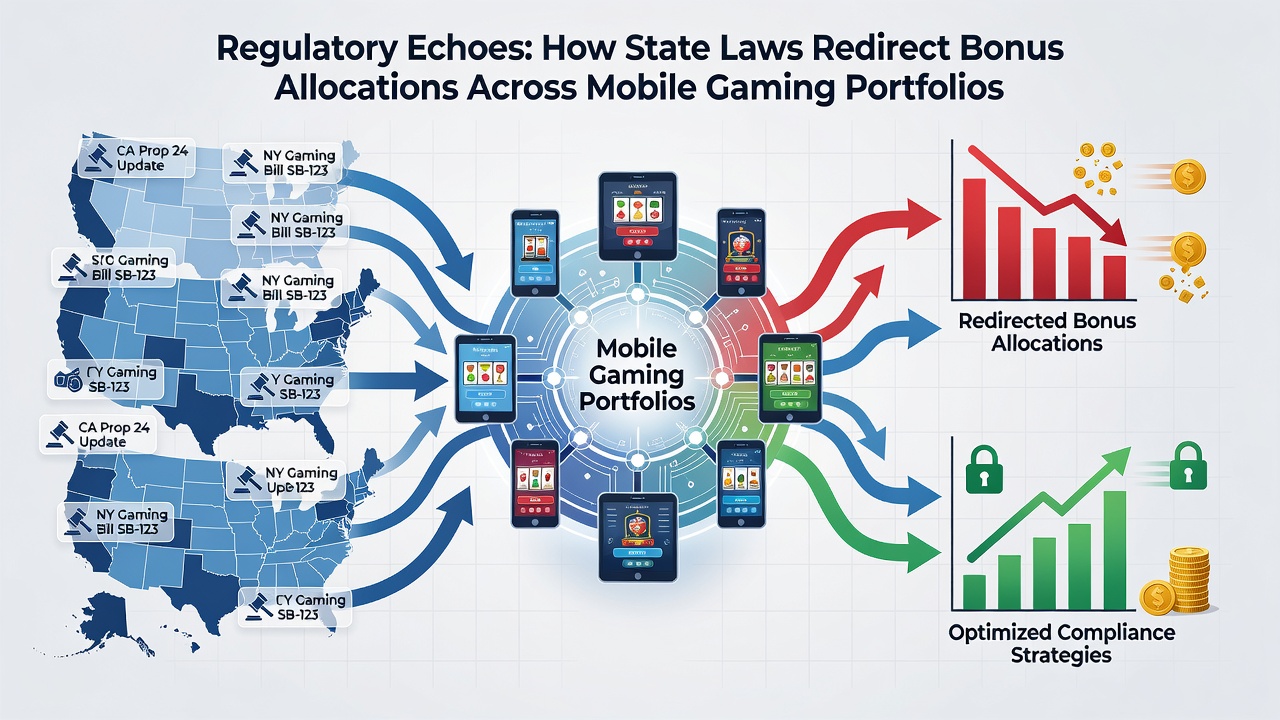
Data from regulatory filings show that when one state tightens rules on slot bonuses, mobile operators often move those funds toward live dealer tables or video poker to maintain overall engagement levels. The process happens quietly through backend adjustments that users rarely see, yet the effect appears across daily active player metrics and average session lengths.
How Mobile Portfolios Absorb Regulatory Pressure
Portfolio managers divide their game libraries into buckets that align with state tolerances. A title cleared for aggressive bonus funding in one market might receive only minimal promotional support in another because of stricter loss-limit disclosures or age-verification mandates. Research from the National Council on Problem Gambling indicates that states with detailed responsible-gaming labeling requirements see operators redirecting 15 to 20 percent of bonus budgets away from high-volatility slots toward lower-volatility options that carry fewer regulatory red flags.
Take one major operator that launched a unified mobile app in 2024 and then split its bonus engine by state in early 2026. The company rerouted a large share of free-spin inventory from progressive jackpot slots into blackjack side bets after Michigan updated its advertising rules mid-year. The change preserved total promotional spend while satisfying new disclosure thresholds that apply specifically to jackpot mechanics.
Cross-Border Effects on Player Behavior
Players who travel or maintain accounts across multiple states notice that the same game can carry different bonus multipliers depending on their registered location. This geographic fragmentation encourages operators to build dynamic menus that surface only the promotions permitted in the active jurisdiction. Industry reports compiled by the Canadian Gaming Association highlight similar patterns in provinces that maintain separate iGaming frameworks, where bonus caps on certain game types push spend toward permitted alternatives.
Figures released by state gaming agencies in mid-2026 reveal that mobile bonus redemption rates fluctuate by as much as 35 percent between neighboring states with contrasting rules. The variation stems less from player preference and more from the mechanical limits operators impose to stay compliant. As a result, game developers now design titles with modular bonus hooks that platforms can activate or suppress on a per-state basis without rebuilding the entire product.
Emerging Patterns in July 2026 Filings
Recent submissions to state regulators show operators documenting precise dollar amounts moved between game categories after each policy update. One filing from a multi-state operator noted a transfer of $2.4 million in bonus liability from high-volatility slots to table-game promotions following a change in disclosure language required by Virginia. Such movements accumulate across portfolios and gradually reshape which titles receive marketing emphasis on mobile dashboards.
Academic analyses published by the University of Nevada, Reno's International Gaming Institute track these shifts over time and find that states adopting uniform advertising templates experience fewer abrupt reallocations than states that issue frequent interpretive bulletins. The difference appears in both the speed of operator response and the breadth of games affected within a single portfolio.
Conclusion
State laws continue to echo through mobile gaming bonus systems, prompting operators to maintain flexible allocation frameworks that respond to each jurisdiction's requirements. These adjustments appear in redemption patterns, game visibility, and overall promotional budgets without altering the core games themselves. Observers tracking regulatory filings note that the pace of such reallocations has increased since early 2026, driven by incremental updates rather than wholesale policy overhauls. The result is a mobile landscape where bonus availability varies not only by operator but also by the precise regulatory environment active at the moment of play.