Patterns in User Navigation Choices Affecting Promotional Access Within App-Based Wagering Services
Taylor Friedrich · Jul 12, 2026
Patterns in User Navigation Choices Affecting Promotional Access Within App-Based Wagering Services
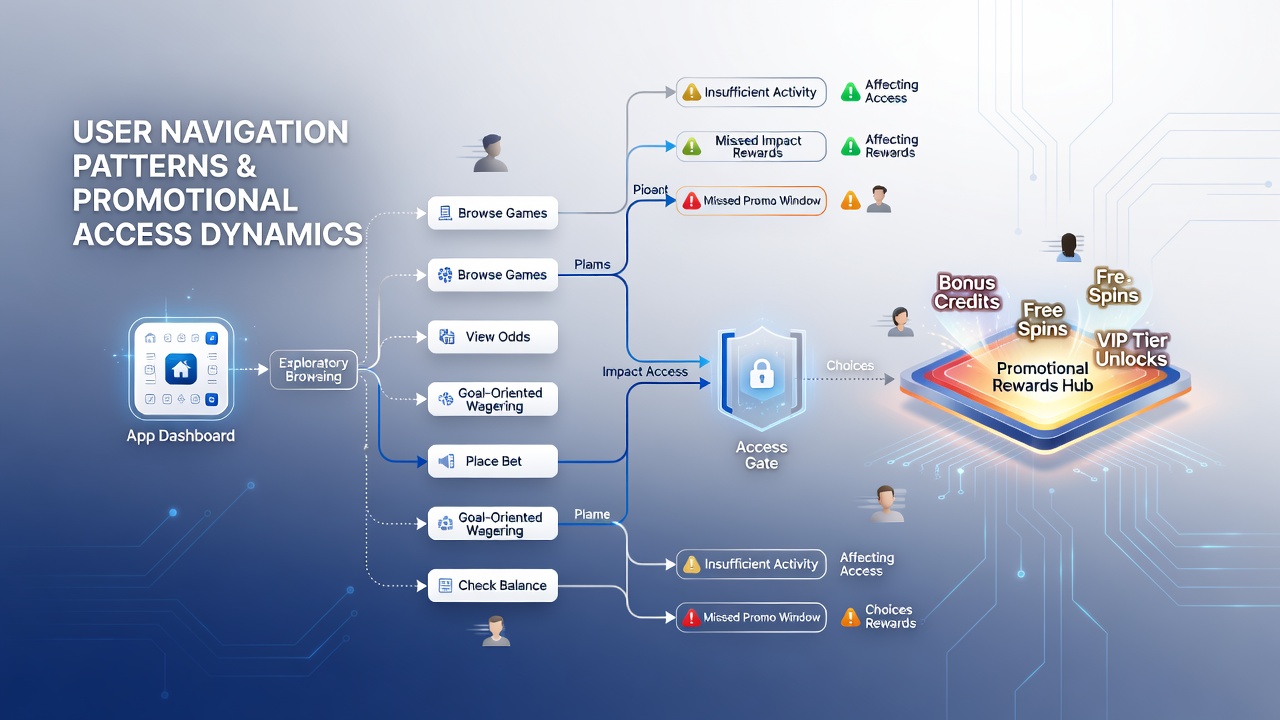
App-based wagering platforms track user movements through digital interfaces wth increasing precision, and navigation sequences directly influence which promotional offers become visible during sessions. Data collected across multiple operators shows that users who linger on specific category pages or follow particular menu paths encounter different incentive structures than those who take more direct routes to deposit screens. These differences arise because algorithms assign promotional eligibility based on observed interaction patterns rather than uniform distribution across all accounts.
Common Navigation Sequences and Their Outcomes
Studies of mobile wagering behavior indicate that users who begin sessions by exploring game libraries before checking account balances tend to receive targeted free-play offers more frequently than those who proceed straight to funding options. One analysis of session logs from major platforms found that this exploratory pattern correlates with higher rates of promotional banner displays within the first three minutes of app use. In contrast, users who open the app and immediately navigate to transaction menus encounter fewer layered incentives during the same timeframe, though they may qualify for expedited cashback notifications later in the session.
Platform designers structure menu hierarchies so that repeated visits to certain sub-sections trigger conditional content updates, and July 2026 deployment logs from several North American operators confirm that these updates adjust available promotions in real time based on cumulative path data. Observers note that users who alternate between sports betting sections and casino game tabs within single sessions often unlock hybrid offers that combine elements from both categories, whereas single-category navigation tends to produce narrower promotional sets.
Data Patterns Across User Cohorts
Research from the Australian Institute of Criminology on digital gambling interfaces reveals measurable differences in promotional exposure tied to navigation depth, with users who drill down through three or more filter layers receiving distinct offer types compared to those who rely on default home-screen recommendations. These patterns hold across geographic markets, though the specific promotional mechanics vary by regulatory framework. Canadian provincial operators, for instance, have documented similar cohort splits in their internal analytics reports since the expansion of regulated mobile betting in Ontario.
Time spent on individual screens also factors into eligibility calculations, and aggregated figures show that extended dwell times on rules or payout information pages precede access to certain loyalty multipliers. This connection appears because backend systems interpret such behavior as indicators of engaged decision-making rather than impulsive play. Consequently, users who move rapidly through checkout flows without pausing on informational content encounter a narrower range of available incentives during the same visit window.
Interface Design Elements That Shape Access
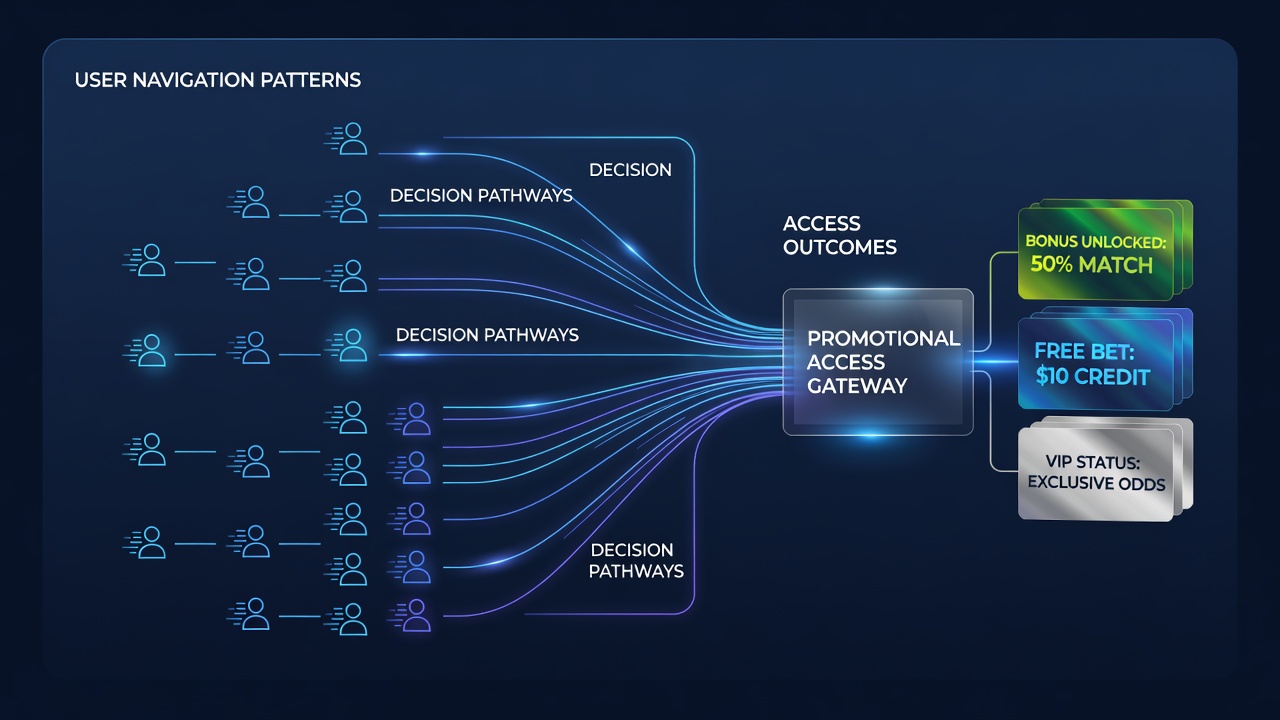
Search functions within wagering apps serve as another variable that alters promotional sequences, and industry reports from the European Gaming and Betting Association document how keyword choices during internal searches correlate with subsequent offer visibility. Users entering terms related to specific game mechanics often receive tailored bonuses tied to those mechanics, while broader searches produce more generalized promotions. The timing of these searches relative to other actions further refines the output, creating branching pathways that operators refine through ongoing A/B testing.
Push notification interactions add another layer, since opening an alert and then navigating to the referenced section frequently unlocks follow-up incentives that remain hidden from users who dismiss the same notification. Platform data collected in mid-2026 shows these chained interactions produce distinct access tiers even among accounts with similar deposit histories and play volumes. The effect stems from how systems log sequential actions as evidence of responsiveness to marketing signals.
Regional Variations in Tracking Approaches
Regulatory environments influence the granularity of navigation tracking, and sources such as the Nevada Gaming Control Board have noted that operators in different jurisdictions apply distinct thresholds for promotional qualification based on path analysis. These differences mean that the same sequence of taps and scrolls can yield divergent results depending on the licensing region, even when the underlying app interface remains consistent across markets. Operators adjust their internal models accordingly, producing localized patterns that reflect both technical capabilities and compliance requirements.
Cross-platform usage introduces additional variables, as users who switch between mobile apps and desktop versions during single account sessions generate composite navigation profiles that affect promotional availability on both channels. Data aggregated by university-affiliated research centers indicates that these hybrid patterns often result in broader access to layered offers than single-device sequences, because combined logs provide richer behavioral signals for algorithmic interpretation.
Conclusion
Navigation choices within app-based wagering services function as active inputs that shape promotional access rather than passive background activity. Patterns emerge consistently across user cohorts when session data receives systematic review, and operators continue to refine how interface structures translate movement into eligibility determinations. As tracking methods evolve through 2026 and beyond, the relationship between specific paths and resulting offers remains a measurable component of platform operations across regulated markets.