Examining How Evaluation Criteria Steer Promotional Redemption Sequences in Wireless Wagering Networks
Mia Lange · Jun 9, 2026
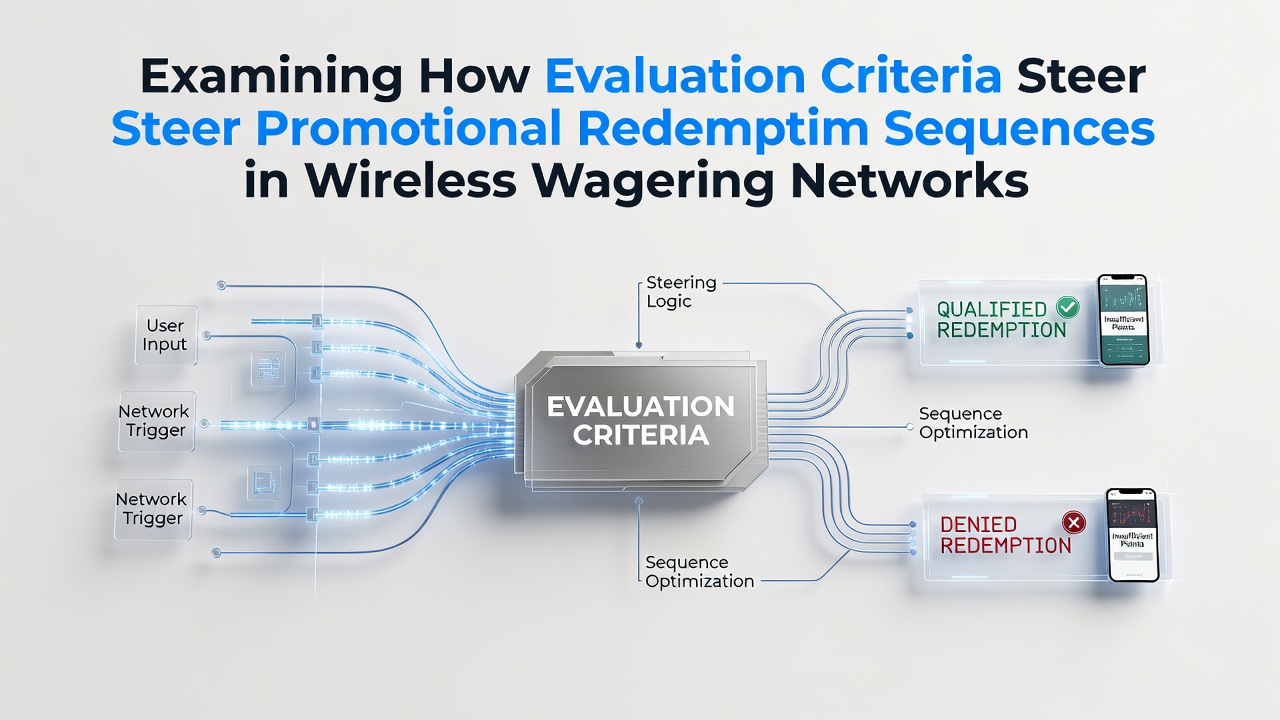
Examining How Evaluation Criteria Steer Promotional Redemption Sequences in Wireless Wagering Networks
Wireless wagering networks rely on structured evaluation criteria to shape how users progress through promotional redemption sequences, and those criteria determine eligibility, timing, and reward allocation across mobile platforms. Operators track metrics such as deposit frequency, session duration, and game type participation, then apply weighted scoring systems that prioritize certain behaviors while de-emphasizing others. Data from regulatory filings shows these scoring models directly influence redemption pathways, because platforms adjust thresholds in real time based on aggregate user performance.
Core Metrics Driving Redemption Pathways
Evaluation frameworks in wireless networks typically combine quantitative indicators like total handle, average bet size, and retention streaks with qualitative flags such as device consistency and payment method reliability. When a user meets a predefined score threshold, the system unlocks sequential redemption stages that may include bonus credits, free spins, or cashback percentages. Researchers at institutions tracking North American iGaming markets note that platforms recalibrate these thresholds monthly, and adjustments often coincide with seasonal traffic patterns or new game releases.
One documented approach assigns higher multipliers to live dealer sessions compared with automated slots, which steers users toward table games that generate steadier revenue streams. In practice, this means a player completing three consecutive live sessions may advance to a second redemption tier faster than someone accumulating equivalent volume on video slots alone. Operators report that such weighting produces measurable shifts in game selection within the first 30 days of a promotion cycle.
Sequence Architecture and Platform Logic
Promotional sequences unfold in staged releases where each stage requires completion of the prior one before the next becomes visible. Evaluation criteria act as gatekeepers at every transition point, checking variables like minimum active days, maximum single-session loss limits, and cross-device activity verification. Because wireless networks operate across multiple jurisdictions, platforms embed compliance checks into these gates to satisfy varying state and provincial rules without interrupting the user flow.

June 2026 brought expanded reporting requirements in several U.S. states, prompting operators to log every criterion evaluation and redemption event for audit purposes. Those logs reveal that sequences lasting beyond four stages experience higher abandonment rates, while shorter three-stage paths maintain stronger completion percentages. Platforms therefore tune criteria granularity to balance regulatory transparency with user retention objectives.
Regional Variations in Criteria Application
North American operators tend to emphasize deposit velocity and loyalty tier progression, whereas Australian and Canadian platforms place greater weight on responsible gambling markers such as time-on-site caps and voluntary exclusion flags. According to figures released by the Nevada Gaming Control Board, mobile redemption completion rates in regulated markets reached 68 percent during the first quarter of 2026, up from 61 percent the prior year. Similar data compiled by the Australian Communications and Media Authority shows that sequences incorporating mandatory cooling-off periods between stages achieve lower dispute volumes.
Observers tracking cross-border operators note that unified backend systems must reconcile these divergent criteria through modular rule engines. A single user account may therefore encounter different redemption sequences depending on the jurisdiction selected at login, even though the underlying account data remains constant. This modular approach allows platforms to maintain one codebase while satisfying multiple regulatory regimes.
Interaction With Loyalty and VIP Structures
Evaluation criteria frequently feed into broader loyalty architectures, where promotional redemptions serve as accelerators toward higher VIP status. Points earned during a redemption sequence often carry multipliers when the sequence concludes within a defined window, creating incentive loops that reward rapid completion. Industry reports indicate that users who finish sequences in under seven days receive 15 to 25 percent more loyalty points than those who spread activity across the full promotion period.
Wireless networks also integrate predictive modeling that forecasts likely redemption paths based on early sequence behavior. When the model identifies a high-probability early exit, the platform may surface micro-incentives such as partial credit releases or extended deadlines to maintain momentum. These interventions remain invisible to the user yet appear in backend analytics as criterion-driven adjustments.
Conclusion
Evaluation criteria function as the primary steering mechanism for promotional redemption sequences in wireless wagering networks, because they translate raw user activity into structured reward releases that align with operator revenue goals and regulatory mandates. Platforms continue refining these criteria through iterative testing, and the resulting sequences reflect both market conditions and jurisdictional requirements. As reporting standards evolve, the transparency of these steering processes is expected to increase, giving regulators and researchers clearer visibility into how mobile wagering ecosystems allocate promotional value.